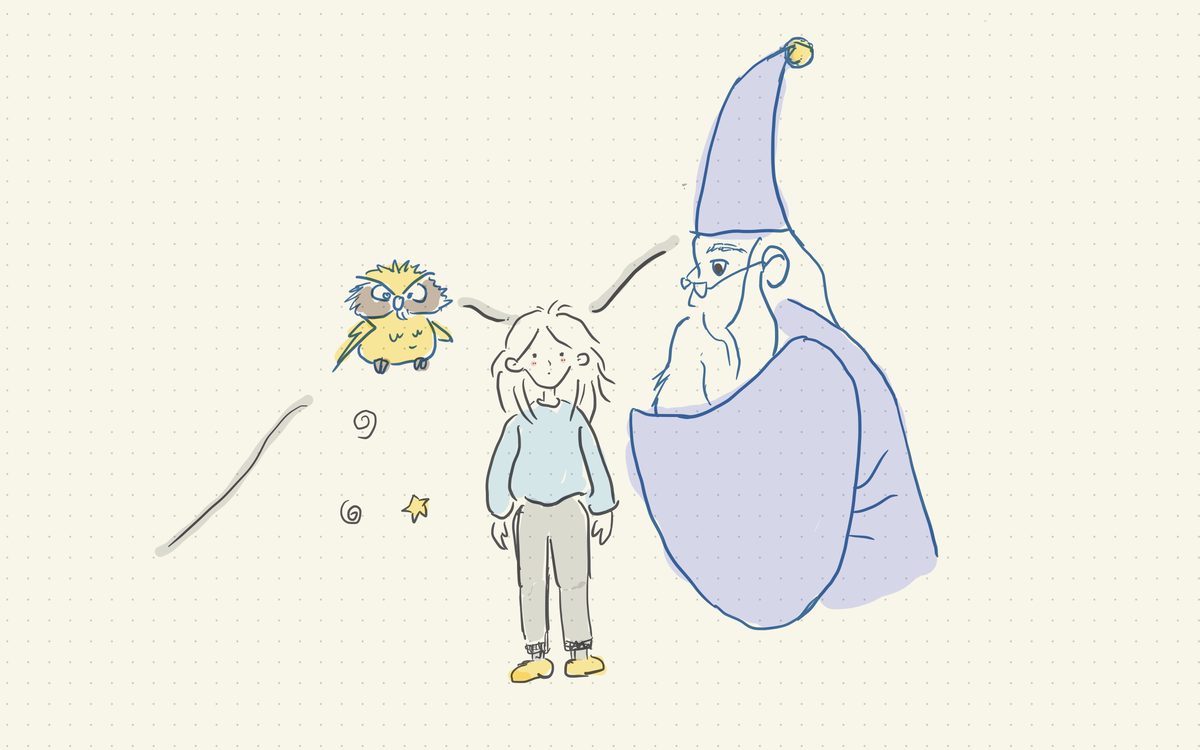
White-Bearded Warlock #1 #
When I was five, my mom was working in another city, so I grew up with my grandparents. I remember watching TV with Grandpa the first night I arrived. It was 封神榜 (The Investiture of the Gods), a classic Chinese mythology drama.
There was a character called 姜子牙 (Jiang Ziya) — who is an old guy with long white beard. He would go fishing with a straight hook and no bait. There’s a Chinese proverb about him:
“姜子牙钓鱼,愿者上钩” Jiang Ziya fishes, and only the willing bite.
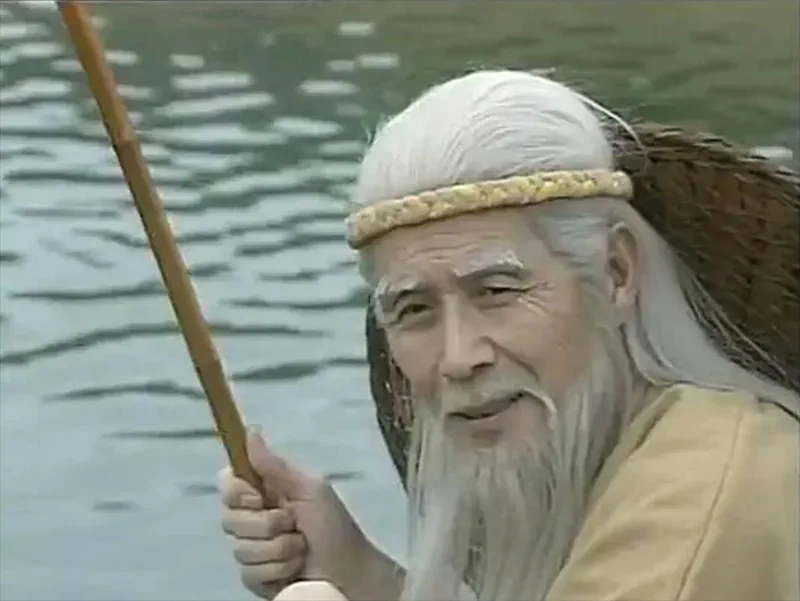
For most of his life, well into his seventies, he had no great accomplishments. His wife berated him constantly. By worldly standards, he would be labeled as a loser. But at eighty, he met 周文王(King Wen of Zhou), and from there began his grand mission — uniting deities and talented people to assist the king in overthrowing a tyrant.
I felt a strange familiarity with this white-bearded old man. I was five — articulating feelings with precision wasn’t exactly my strong suit. But from somewhere deep inside, a feeling of admiration rose up. Perhaps I wished that I, too, could stay composed through life’s changes and personal struggles. (And yes — five-year-old me, separated from my mom, almost certainly felt that life was full of struggle.)
White-Bearded Warlocks #2 and #3 #
I discovered White-Bearded Warlock #2 and #3 around the same time — my first year of middle school.
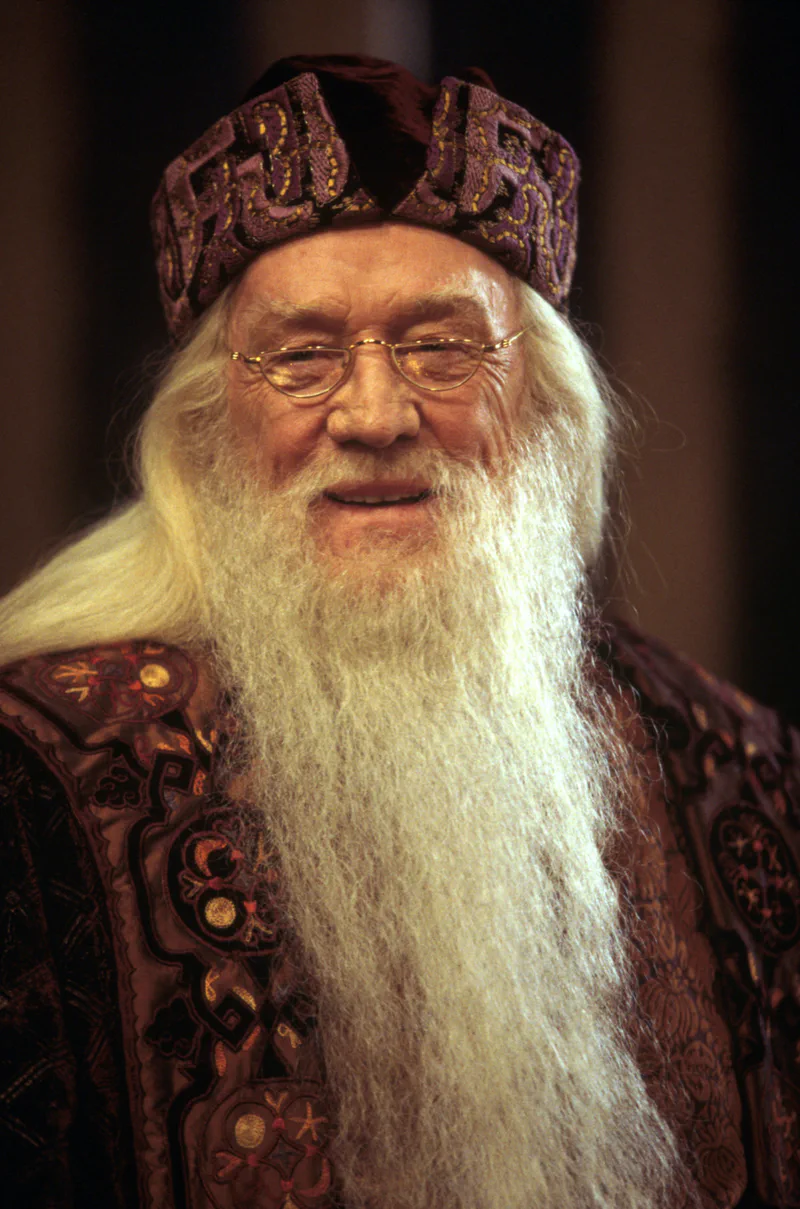
That’s when I discovered Harry Potter — first the movie The Philosopher’s Stone, then I read the two books published at that time. The character who fascinated me most was Dumbledore, headmaster of Hogwarts, who wore half-moon spectacles, eyes twinkling with wisdom and mischief. Powerful, witty, and humorous - all the characteristics I longed to have. He is the kind of person who wields immense power but sometimes sets his password to his favourite sweet, Sherbet Lemon. Nowadays there’s a term for this — “contrast cute.”
I watched Harry Potter and the Philosopher’s Stone and The Lord of the Rings the same summer. My cousin and I both preferred Harry Potter — we nearly fell asleep watching The Lord of the Rings. In hindsight, it makes sense: adults — even the ones with magic — can’t just use it freely. They have to play politics. I don’t remember much about The Lord of the Rings, but I did remember Gandalf I’m not sure if it was the way his long white beard swung in the wind, or Ian McKellen’s voice, or the white robes paired with magic — ancient yet forever effective.

Perhaps My Soul Is a White-Bearded Warlock Too #
From my three white-bearded warlock idols, I reached a conclusion: perhaps my soul is a bit like a white-bearded old warlock. On good days, I might even have twinkles ✨ in my eyes.
Let’s pause for a sec. I am aware this might be a bit counter-stereotypical — the figure I’ve resonated with most since I was five
- ❌ is not a princess,
- ❌ not a handsome pop star,
- ✅ but an old man in white robes with a long white beard who can do a bit of magic — sometimes for fun, sometimes for practical reasons.
Years later, I took the famous MBTI personality test. My result was INFJ — the Advocate. I shouted in my heart: “Wait — isn’t that a white-bearded warlock?! Ah-ha, no wonder!” (though technically the icon is a green old man).
Dr. Xie The Taichi Master #
Because my grandparents’ house was close to my school, I always walked to school. During middle school and high school, I’d leave the house around 7:30 every morning. On my way I’d often run into Dr. Xie — who is my grandmother’s age and lived in the same neighbourhood. She was a Taichi master.
I remember her holding a Taichi sword, moving swiftly. Her white Taichi outfit flowing in the wind, her silhouette gleaming in the morning sunshine — blessed with the kind of aura that kung fu masters have when they make their entrance. Every time, I’d watch from afar with admiration and awe.
仙风道骨 — The Spirit of a Daoist Sage #
There’s a Chinese phrase called 仙风道骨 — the bearing of an immortal, the bones of a Daoist sage. An effortless grace that comes not from youth or beauty, but from connecting with nature and moving through the world with Dao.
At the beginning of this year, I started learning Taichi at UC Berkeley. We began with 八法五步 (Ba Fua Wu Bu) — not the standardized national version, but a customized blend of Yang style and Sun style Taichi, because our Sifu studied under a variety of martial artists who hold lineages in Chen style Taichi, Bagua, Xingyi, Shaolin, and others.
He would explain the real-world applications of Taichi postures — having a student throw a punch at him, then resolving it with what looks like a gentle push, borrowing the opponent’s force. We watched with amazement every time.
Some people in the club have been practicing Taichi for three years, ten years, and they’re still learning new things each term. Taichi is deep and vast — the more you practice, the vaster it becomes.
We practice two days a week, two hours each time. I love the fact that Taichi is something I can do from now all the way to when I’m very old. I can grow and mature and get better at it as I age. It’s extremely comforting to think that:
For now, I hope to cultivate an unhurried mind and a body free of aches and stiffness — and to develop what’s called 松沉劲, that quality of being simultaneously relaxed and rooted.
I don’t know how long it will take. Perhaps by the time I get there, I’ll be the age of a white-bearded warlock myself.