Last night was the night I’d been counting down to. On April 23rd → Venus would act as a signpost to Uranus. At 6pm, while the sun was still up, I asked Mitch to move the eight-inch Dobsonian out to the front porch, anticipating to catch Venus and Uranus together in the same frame of the 30mm eyepiece.
We didn’t find Uranus, likely drowned out by Venus’s glare. Poor Uranus: compared to its solar-system sibling Venus, it’s about 7,600 times dimmer.
But last night had its own surprises in store! 🥳
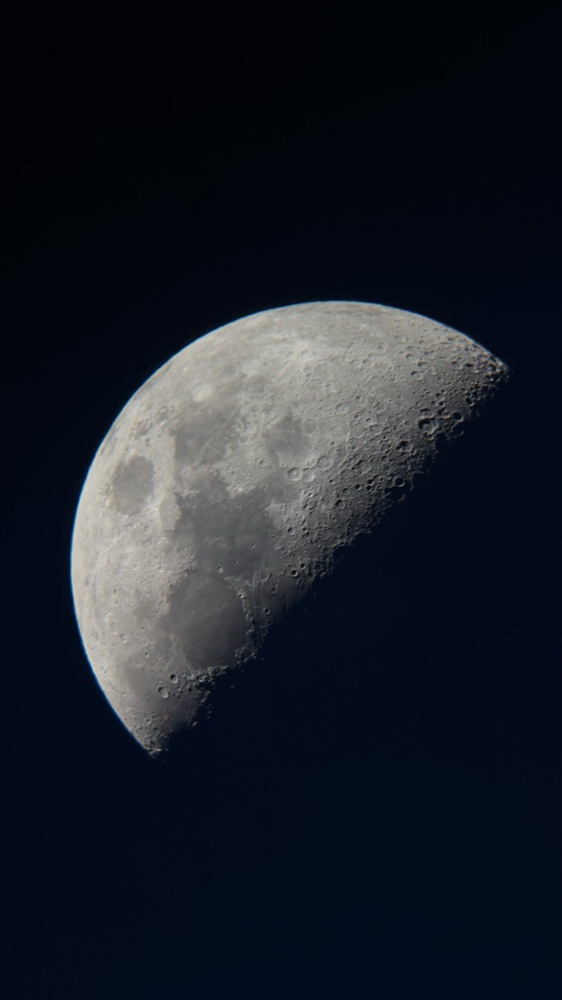
🌓 First time capturing the Moon’s surface #
Just after sunset, before the sky was fully dark, the only thing visible was the Moon.
One of my birthday gifts from Mitch this year was the Celestron smartphone adapter, a gadget that clamps a cell phone onto the telescope’s eyepiece. We attached Mitch’s iPhone (1x camera mode) against the 30mm eyepiece via the adapter, pointed the finder scope at the Moon. The miracle moments –>
For the first time in our lives — we captured the Moon’s surface! Not a NASA photo, not a downloaded image: the craters, the shadows along the terminator, the texture of the maria, all of it crisp and clear.
Our amateur telescope, receiving photons that were ours alone: no other human has ever seen them, no other human ever will. They entered our eyes, projected a one-of-a-kind Moon onto each of our one-of-a-kind optic nerves and brains, and became a part of us.
🔭 Astronomy Outreach in Our Neighborhood #
Four of my neighbors wandered over last night, curious about the big tube pointed at the sky. I showed them the Moon first, and every single of them gave the same best reaction: “OMG!!”
Then we pointed the telescope at Jupiter. As I pointed out the four tiny pinpricks strung out beside the planet and explained that they were the famous Galilean moons, each of them let out another “OMG! That’s SO COOL!”
To be fair, Jupiter doesn’t look like NASA photos in the eyepiece at all. It’s a small bright disc with faint cloud bands, and four points of light that are themselves whole worlds. Somehow that’s more moving than the impressive images, because you’re actually experiencing it: the photons hitting your eye left Jupiter about 40 minutes ago.
I got to taste the joy of astronomy outreach. It’s a marvelous feeling when someone’s face lights up as you share a little piece of the universe’s wonder with them.
Uranus I’ll chase down another time, maybe through a bigger telescope at the Chabot Space & Science Center. Last night the sky had something different in mind and I’m completely happy with its plan 😄.
✏️ PS #
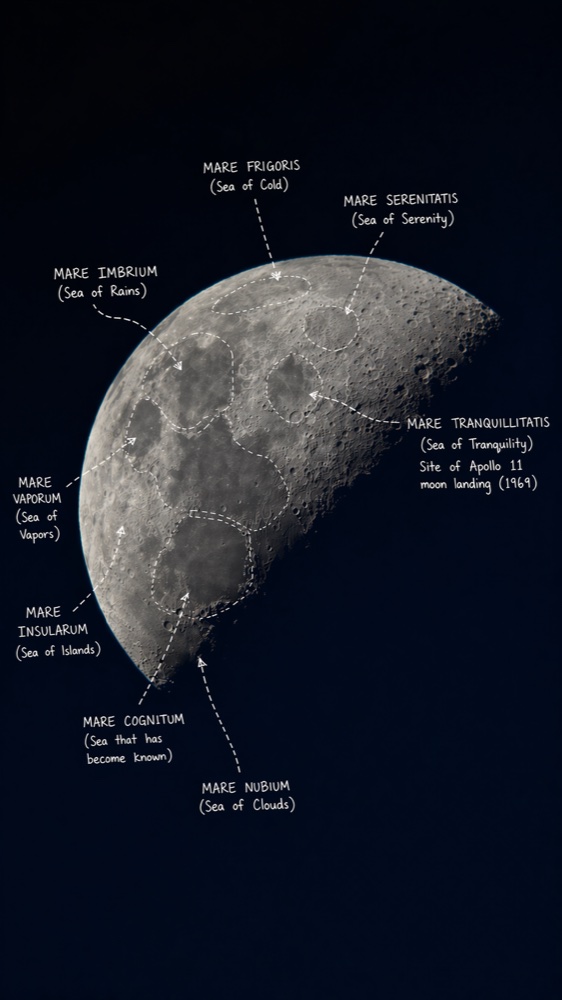
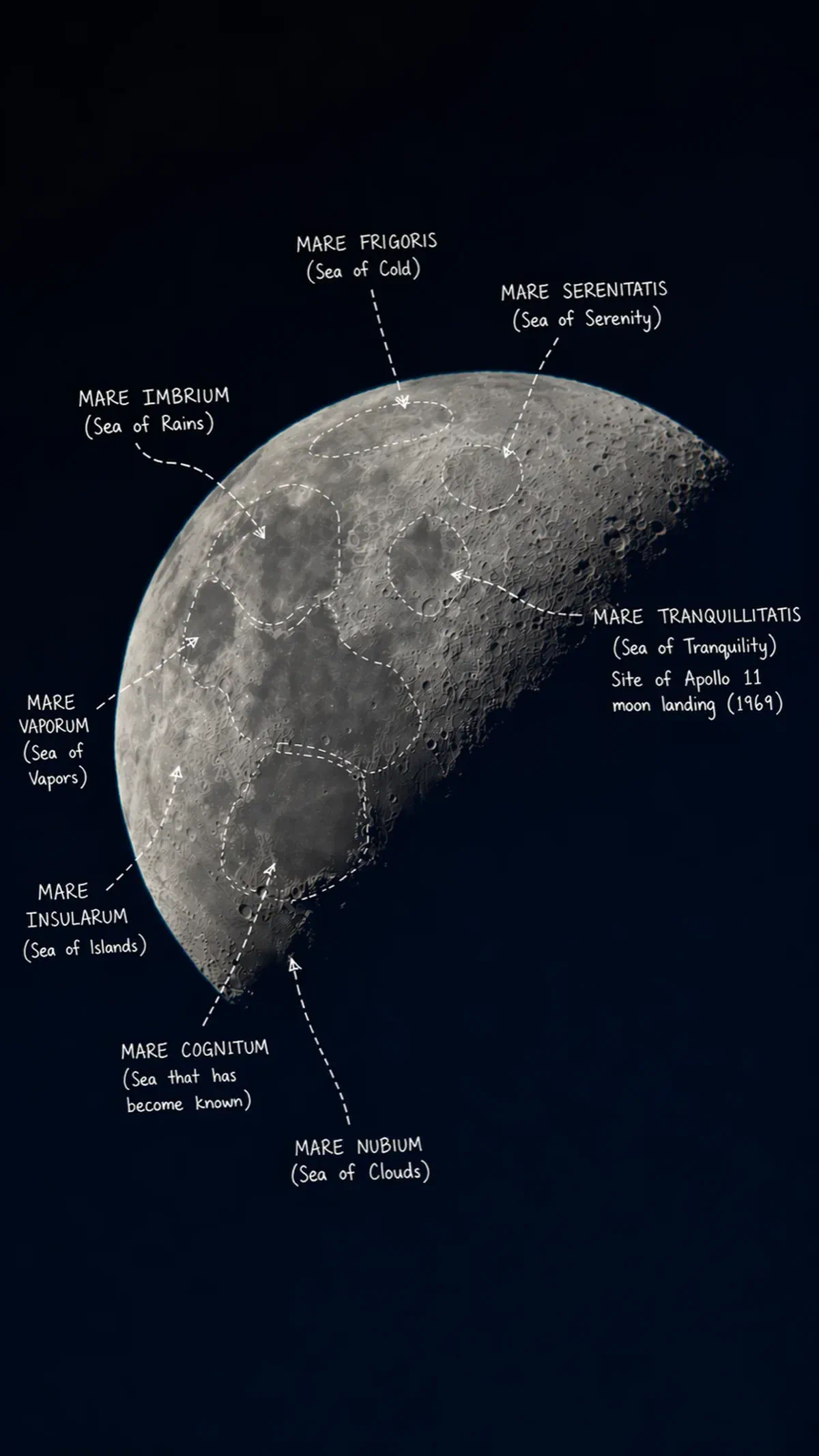
The annotation on the featured image was generated by GPT image 2 with the prompt below.
Can you observe the elements of the moon and add hand draw notes
to the different parts? For example, using dashed lines and arrows
to point the different mare