I recently watched the new Netflix documentary A Gorilla Story: Told by David Attenborough. I came to it right after the British royal family celebrated Sir David’s 100th birthday in this charming video — half Harry Potter, half nature fairytale, and lovely in the best possible way.
The film returns to a gorilla named Pablo. He’s the one from the iconic BBC footage, back when Sir David was still young and met mountain gorillas for the first time, in 1978. He had set out to explain the evolution of the thumb and forefinger to the camera, the opposable grip that lets primates grasp and hold things. Then the magic happened.
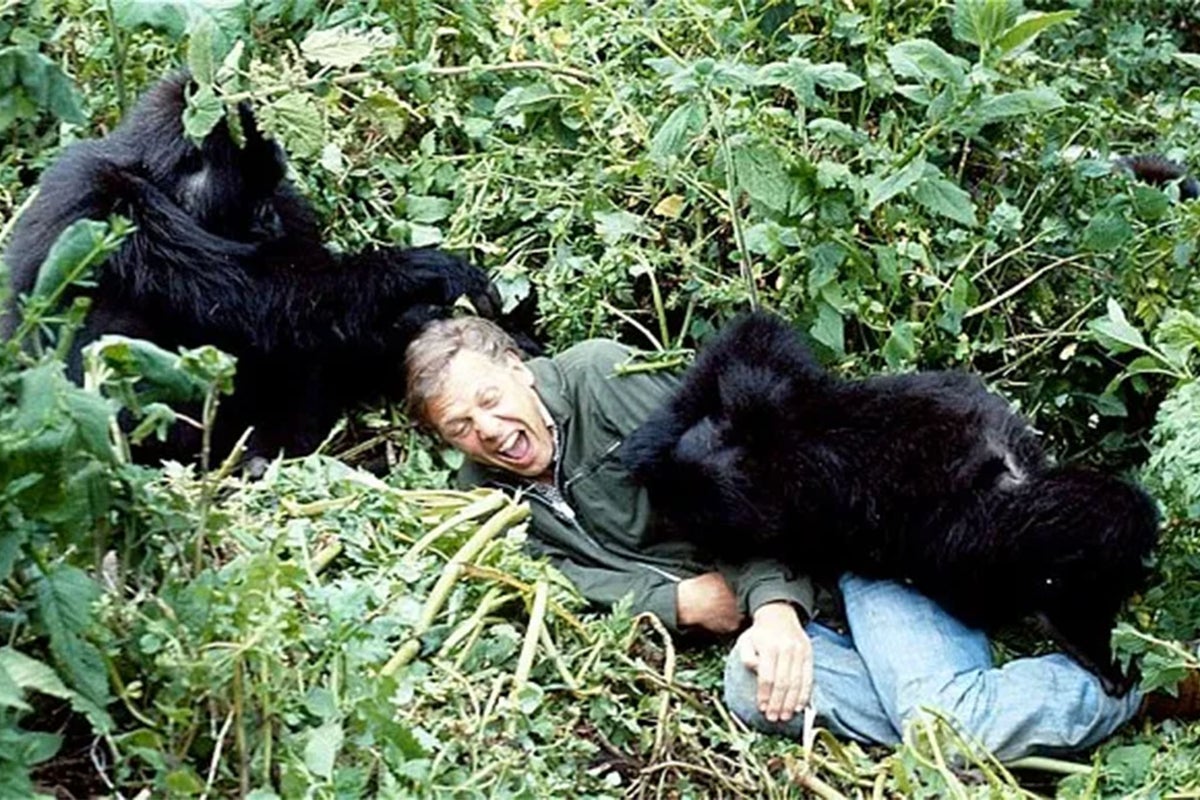
Pablo climbed onto him and started to play. Sir David abandoned his script and let it happen. The sequence became one of the most celebrated moments in the history of wildlife television. When Channel 4 viewers once voted on the hundred greatest TV moments, it landed at number twelve, ahead of the Queen’s coronation.
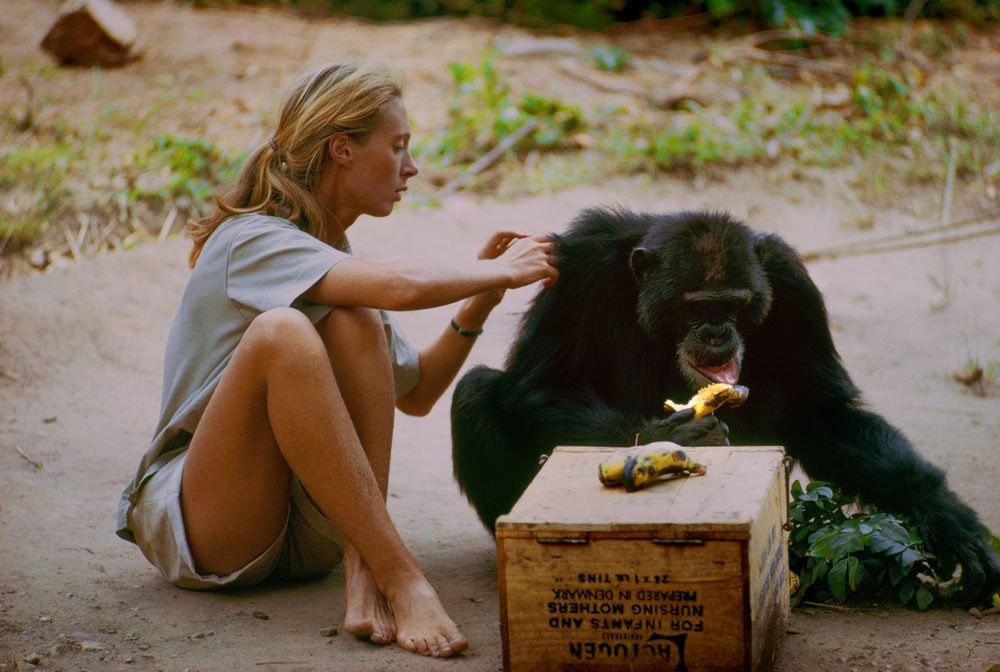
Pablo reminds me of David Greybeard: the first wild chimpanzee in Gombe to trust Jane Goodall, the one who led her into their world and, in doing so, helped us rethink what we thought we knew about ourselves, our tools, and the blurred line between human and animal.
Great Minds Recognize Great Minds #
There’s no doubt that Sir David Attenborough and Jane Goodall are exceptional human beings. They have wisdom like the ocean, souls like beacons. But what strikes me as even more exceptional: it wasn’t only we humans who recognized it. Pablo and David Greybeard recognized it too.
And that, I think, is what makes the two of them so extraordinary, even though almost no one seems to notice.
Pablo #
Pablo was a bit like those rare, unconventional minds we sometimes meet among people. He was only about four when he met Sir David in 1978. The same year he lost his mother, Liza, and became an orphan. Did he sense something brilliant in this strange visitor? We can’t ask him. But Sir David described this encounter emotionally:
In 1993, at around nineteen, Pablo became the founding dominant silverback of his own group. About a year later, a younger, stronger male rose to challenge him. And here Pablo did something unusual. Instead of fighting for pride, instead of meeting force with force, he stepped aside, peacefully, and became second to the new leader: an ambitious young silverback named Cantsbee.
It takes two to tango. Cantsbee turned out to be a legendary leader in his own right, and together they held the group in a rare, lasting stability. Under their shared leadership it grew to sixty-five individuals, the largest mountain gorilla group ever recorded. But Pablo is the one who fascinates me. His willingness to interact with a human, to see past glory and rivalry, reminds me of Daoist sages.
David Greybeard #
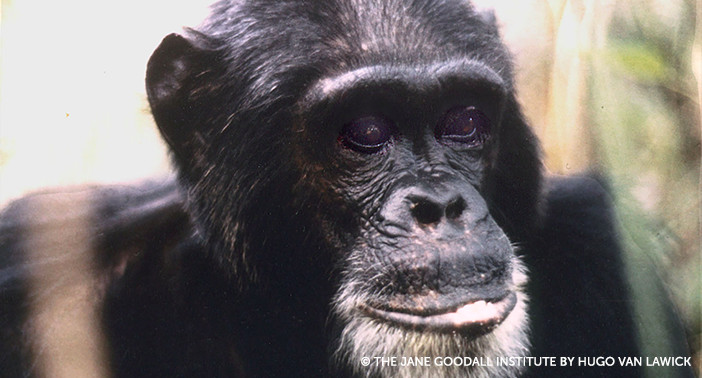
David Greybeard had a similar quality. Calm, intelligent, with his own opinion about choosing friends. When Jane first arrived in the Gombe forest, the other chimpanzees fled. David Greybeard let her come closer. In time he led her to the others, and to one of the most significant moments in modern primatology.
In November 1960, Jane watched him pick up a little twig, strip away the leaves, and poke it into a tunnel to fish termites out of a mound. At the time, Western science defined the human species as man the toolmaker. When Jane telegraphed the news to her mentor, the paleoanthropologist Louis Leakey, he wired back:
“Now we must redefine tool, redefine Man, or accept chimpanzees as humans.”
How to Recognize Exceptional Beings #
I had a small epiphany.
Great beings are the ones who can form unlikely friendships across difference, transcend the norms of their kind, and in turn help others see themselves in a new light.