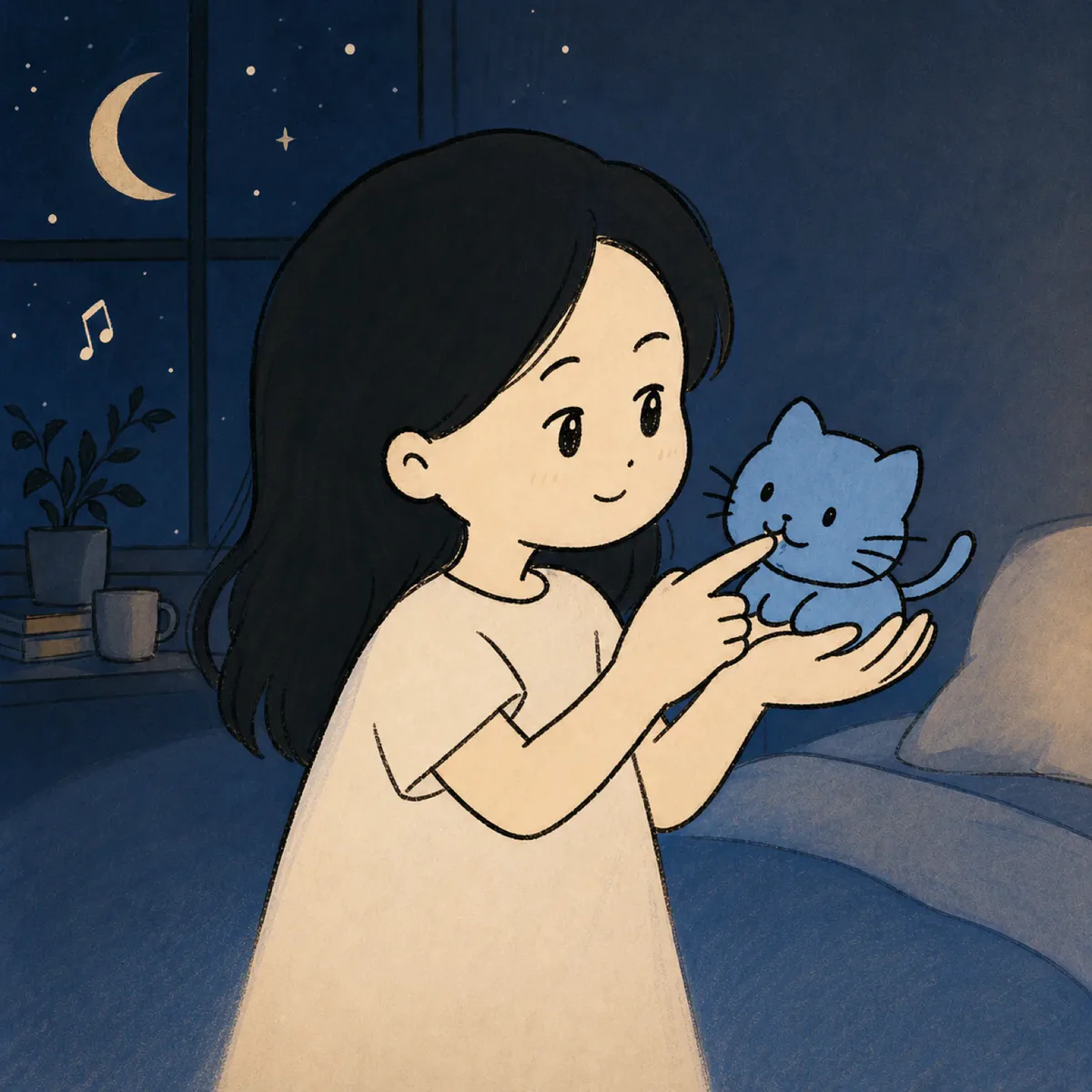
Historically, being a Renaissance person meant you could paint, compose music, study astronomy, write, engineer, and explore philosophy. For most of history, that required decades of apprenticeship in each discipline.
Without the help of AI, I would never have dared to try. I didn’t have the proper training, and I didn’t think I had the talent for it.
But today I made an album with two tracks. It’s called Winter Camelia.
Winter Camelia #
This is the first track, the piano solo piece closest to my original composition.
I named the original melody Winter Camellia, inspired by a Japanese camellia in our backyard. I remember it was one day at the end of this past winter. I was thinking about my nephew, who was three and had just started kindergarten, and I looked at the Japanese camellia blooming so beautifully in our backyard. A warm, nostalgic feeling washed over me. I pictured him graduating from kindergarten in a few years, with this melody playing in the background. I could feel time passing. Yes, the camellia will bloom again next winter, but they won’t be the same flowers. Each moment is unique.
Camelia Variable Star #
The second one I called Camelia Variable Star. It keeps part of the original melody but adds more variations. It reminded me of a variable star, which is typically a binary star system: once in a while, the white dwarf steals enough material from the red giant and goes nova.
By the way, I’m still waiting for T Coronae Borealis to go nova. If you want to spot a new star with your own eyes, keep a close eye on the constellation Corona Borealis!
I really like both pieces, and I could totally see myself putting them on repeat while writing or working. That surprised me a little. Back in March I wrote that AI music is beautiful yet forgettable. I couldn’t hum a single melody after five listens. Yet here I am, unable to resist picking bones out of eggs, unable to resist the temptation of a new toy either. Oh, humans~
Since I liked them so much, why don’t I just upload them to Spotify so I can listen easily? It turns out you can’t upload your own music to Spotify directly. You have to go through a distributor. There are a number of options, and I saw CD Baby was one of them. I’m a fan of Derek Sivers, who was the original creator of CD Baby. It’s been sold since, but choosing it still gave me a tiny sense of connection to him.
So I signed up for an account, filled out a bunch of information, uploaded the album artwork (made in ChatGPT with my own doodles), and resampled the WAV files (using Claude Code) to match CD Baby’s CD-quality requirements. Then I hit Submit. I was happily anticipating that I’d find my music on Spotify in 15 minutes.
And no. It turns out it can take days or weeks for CD Baby to review your submission! Sigh…
Update (July 2, 2026): The wait is over. Winter Camelia is now live, go give it a listen on Spotify!
So I made a music video instead #
I decided to use my own doodles to generate some scenes and create loop animations.
The two characters come from a dream I once had - me and a tiny blue cat. I put out the doodle a couple of weeks ago.
Using GPT Image, I generated a series of illustrated scenes featuring those two characters. The scenarios are inspired by my personal experience: safari, writing, stargazing with my telescope.
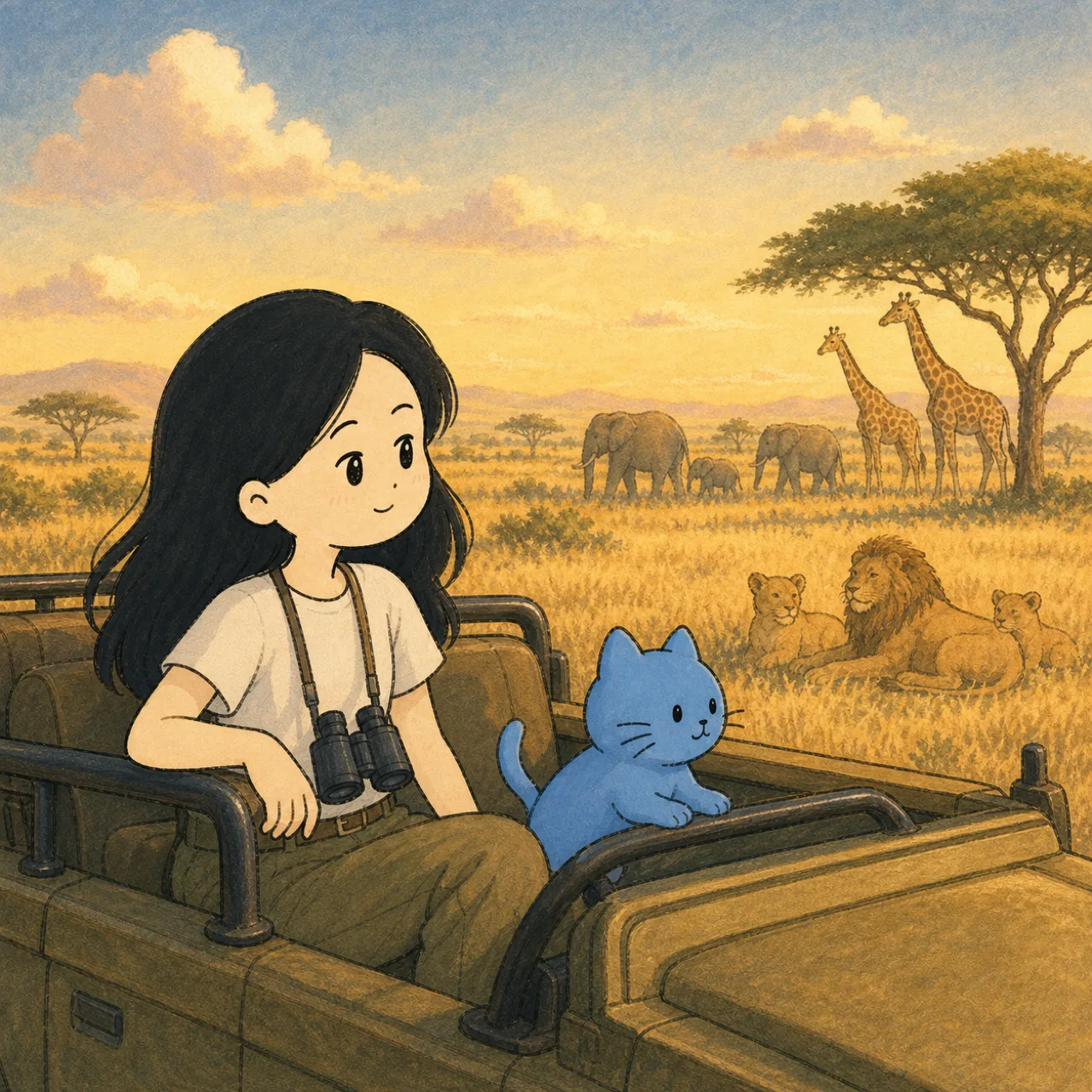
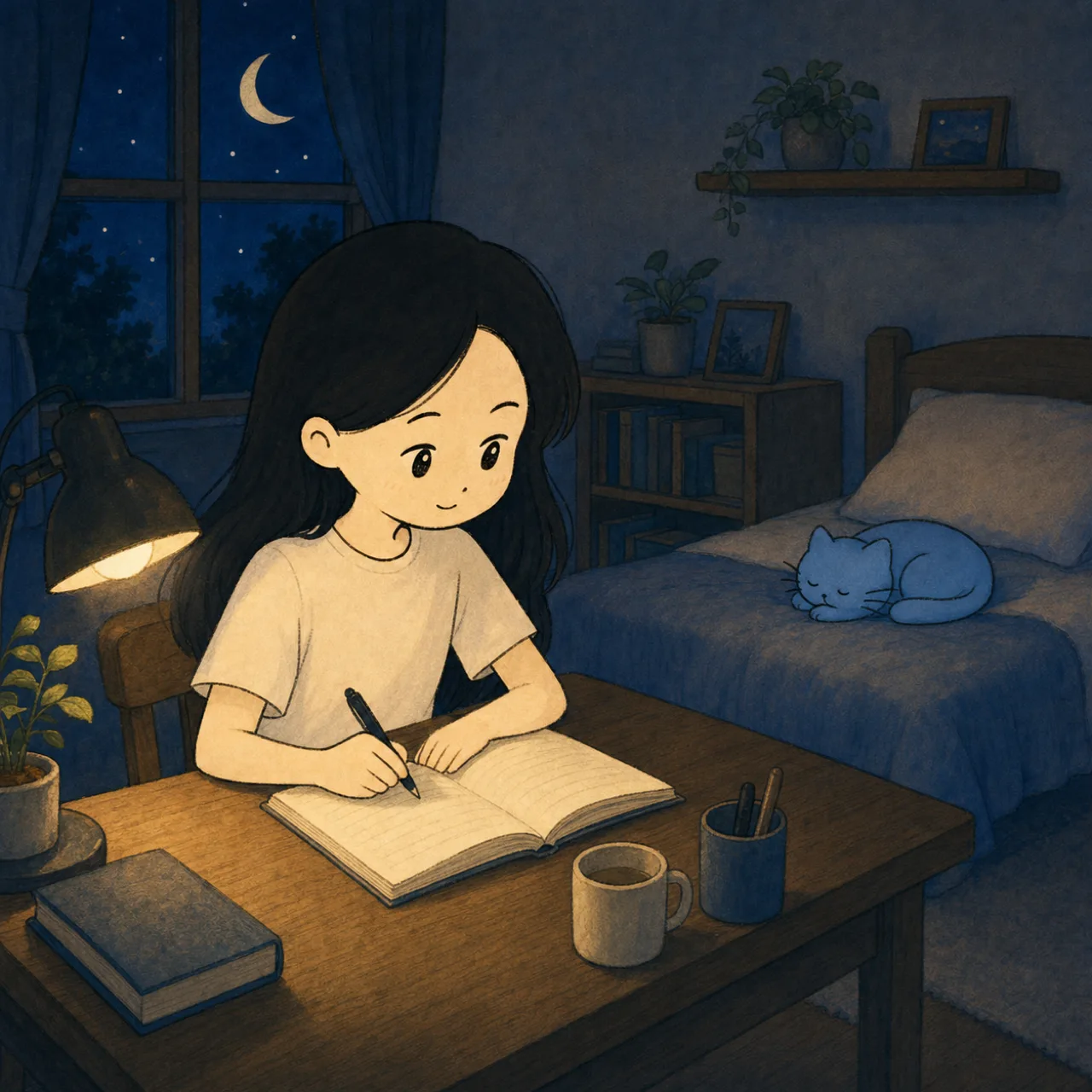
I then used ChatGPT to help write prompts for Kling and Seedance, transforming those illustrations into looping videos. The music is another version of Camelia Variable Star that Suno generated from my original melody, one I call Camelia Pulsar. It didn’t make it onto the album, so I used it for the video.
To summarize the step-by-step process:
- I recorded the melody and used Suno to generate different versions.
- I downloaded the stems and removed the drum track to create a more intimate sound.
- I had a dream about myself and a tiny blue cat. I turned that dream into a four-panel hand-drawn doodle.
- Using GPT Image, I generated a series of illustrated scenes featuring the two characters in my doodles.
- I used ChatGPT to help write prompts for Kling and Seedance, transforming those illustrations into animated sequences.
- Finally, I edited everything together in CapCut to create the finished music video.
None of this required decades of apprenticeship. I happened to come up with a melody, happened to have a dream, and between my clumsy chord-writing, my half-baked comic-drawing, and a lot of help from AI, I finished something that would once have been impossible, something I’d never even dared to imagine.
I would never be so presumptuous as to claim that I’m an artist or a musician, but I actually get to enjoy and collect these little artifacts, each one with a bit of myself worked into it and a tint of AI’s magic.